image: header
Home | About | Contact | Editing Services | Resources | Workshops | Mythic Impact Blog | Sowing Light Seeds

“You enter the extraordinary by way of the ordinary.” ~Frederick Buechner

Thursday, October 30, 2014

Strategy # 4 Hungry Territory: Visible Threat by Janice Cantore


Build Your Story: 8 Strategies for Writing Innovative Setting with Impact

Visible Threat: Case Study

Brinna sighed. “I went into the water accidently, nothing heroic. Then I blacked out and next thing I remember I was in an ambulance.”
….
Brinna shook her head and explained. “When I saw the girl, adrenaline took over. I tried to get close enough to the edge and grab her and fell in. It was stupid.
“Hear, hear.” Maggie held up her soda cup up. “She and Rick were connected by a leash. When Brinna lost her balance, so did Rick.  They both went into the water, but he hit the rocks. Matt and Jeff grabbed him; then all of a sudden there were firemen everywhere. Their timing was impeccable.”

The above passage gives a version of the characters impression of the events that left Long Beach Officer Brinna Caruso with a broken wrist, and a fellow officer facing dangerous surgery due to a fractured shoulder and broken back.

Earlier the readers saw that five police officers acted capably and with courage, but not with any degree of irresponsibility. They all knew the dangers of the river and took precaution. All Brinna planned to do was kneel on the water’s edge in the hopes the drowning girl was swept close enough. Rick also stood as close to the water’s edge as was safely possible. Then they added the extra safety precaution of the leash.

It’s a great example of how the combination of a known natural territory and experienced preparation can still upend a situation into high conflict and high stress.  Now a life is on the line as well as a solid partnership, and relationships both personally and professionally.

Exercise: Make a short list of normal actions your character does in their daily job. Then next to each one choose how an accident could be directly related to that normal activity.


Share: Think of a possible example for your character where a slight fall could have dire consequences based on their territory.

Read deep, marcy


For more information on Janice Cantore's intriguing mysteries check out her site at: http://www.janicecantore.com/


Thursday, October 23, 2014

Strategy # 4 Hungry Territory: A Walk Analogy


Build Your Story: 8 Strategies for Writing Innovative Setting with Impact

Start your character’s journey, emotional and literal, with his immediate environment. Have him see it close up. Then pick one or two images to be representative of that territory.


Writing Exercise

1.    Take a walk down a street in your childhood. Write down what you see, hear, remember. Write quickly a free write, broadly spaced. (about ten minutes)

2.    Now go back through your notes and add specifics: sound, taste, and smell. For example, not just a swing on the front porch or in a yard, but what kind of swing. Metal-wooden-plastic/size/sounds it makes.

3.    Choose one aspect of your walk—a particular setting or character or animal and highlight either by enhanced detail, or exaggeration. Draw an analogy. For example:
“And the story goes she never forgave him. She looked out the window her whole life, the way so many women sit their sadness on an elbow.” Sandra Cisneros.

 Did some additional thoughts, feelings insights come with each layer?

4.    Take the scene you used for your painting, and now have your character walk through that ‘street’, even if the street is a pathway through a plain or a forest, adding specific sounds, tastes, smells but using the emotional response you experienced on your own memory walk.

Share: How does that change from your original perspective, or does it?


Read deep, marcy

Thursday, October 16, 2014

Strategy # 4 Hungry Territory: Journey


Build Your Story: 8 Strategies for Writing Innovative Setting with Impact

Territory as Journey

In addition to the close-up possibilities we also need to step back and take an overview. Think in terms of a lens camera on zoom. We go from the tight shot to the distance shot.

A chef stands back a little to look at his masterpiece entrée. A quilter needs to move far back in order to see the whole when completed. One way to take a different angle view of territory can be as a journey regardless of distance.

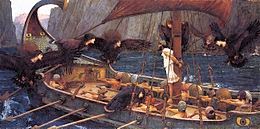
We can turn to the rich history found in myths and their geography, which can be mined for today’s stories because their emotional truths still apply despite the change in civilizations. In his book, Realms of Gold, Leland Ryken comments on myth’s enduring qualities in one famous journey.

“During his wanderings, Odysseus encounters approximately what anyone taking a journey away from home would encounter today: violence, sexual temptation, drugs (the island of the lotus eaters), the occult, physical danger, death, lost luggage, homesickness, getting lost, culture shock (for example, the overnight in the Cyclops cave and the spectacle of Odysseus’ seeing his fellow sailors transformed into animals as he arrive at Circe’s house), hospitality, the impulse to give up, inadequate transportation, a lost passport (Odysseus arrives stark naked and without identity at Phaiacia), and personal conflict with fellow travelers.”

Sometimes we go on a journey and experience the unexpected. It can happen through our travel plans where nothing is as it should be, or was promised, or is even there anymore. It can happen in familiar territory like a walk around the block where suddenly we see an incident that impacts our lives and gives us an epiphany. We start off in one direction but when we come to the end we find we are different. The journey has changed us within. So regardless of genre, we almost have an internal radar to all journey stories, whether of quest or immigration or exile or discovery or mystery, and regardless of distance.

Share: What is your favorite childhood story that involved a journey? 

Read deep, marcy

Thursday, October 9, 2014

Strategy # 4 Hungry Territory: Danger


Build Your Story: 8 Strategies for Writing Innovative Setting with Impact

Continue to ask these questions of each key territory spot you choose.

2.  Is it man-made?

What welcome animals live within—how much care do they need—is the person elderly and in danger of tripping over a skittish cat? Unwelcome: mice—roof rats—snakes under the foundation—spiders. Looking for a way to drive your comfortable heroine in her lovely home into high stress? Have her return from vacation and find her home literally jumping with fleas.  (True story)

 3. What is the history behind it?

Don’t just examine the historical data but the animal as well. Perhaps a species has been driven out of their natural habitat. And then there is a severe drought. Do they then become a danger or are the people even more of a danger to them. Is the town on a migration pathway? Do the people co-exist with the bi-yearly invasion or it is a mini war zone?

Or they know how to take advantage when the opportunity shows itself. Here’s a photo that showed up on facebook one day. Talk about territory and landmark together!

“After all the terrible rain in England recently, a group of swans swim down flooded walkways in Worcester yesterday..”


 4. Is it considered to be holy ground? Why?
 5.  If so, is it open to everyone to visit or considered forbidden?

Holy ground will need to be clearly defined for your world. In medieval times a person could seek sanctuary in a church or monastery. However their life was forfeit if they left the grounds, so, in a way, they chose a form of prison.

Holy ground may or may not include cemeteries. A wildlife reservation may be considered a type of holy ground sanctuary to preserve nature. And what happens if valuable minerals or oil or gold is found underneath. The movie Avatar explores this entire theme across space, species and culture.

Share: What did you uncover or realize could become a potential conflict in one of these categories?

Read deep, marcy

Thursday, October 2, 2014

Strategy # 4 Hungry Territory


Build Your Story: 8 Strategies for Writing Innovative Setting with Impact

Introduction Hungry Territory

As you have already seen, these categories overlap. It’s up to the needs of the scene, the character, the tone, and the atmosphere to choose which to highlight at a time. Territory and Landmarks obviously connect. But whereas last lesson we looked at the qualities of the specific landmark—here we’re looking at the surrounding territory.

Even in a home or a spaceship the individual rooms could be considered mini territories. Your questions now are with whom, other than people, are your characters sharing their space with. Set up your key setting like a painting. It’s marked on a map, in a chosen habitat landscape, and has a focused landmark. What else lives there? What is visible? What stays hidden?

Let’s look at the questions from last lesson and expand them to territory choices. As you choose specific landmarks for your novel world, especially those that will remain constant through a series, ask these questions of each key spot you choose.

Is it natural?

If it is natural, what animal life is common? What animals live there? Birds, insects, marine or land, or both? Wild or domestic? Dinosaurs or dragons?

We’ll look at some other possibilities under danger, however for now note how even the simplest inhabitant could create problems.

For example, I once knew a camp volunteer who was so allergic to bees that she only had two minutes before going into deadly anaphylactic shock if stung. Yet she refused to let that dictate her life. So she wore a waterproof casing around her neck to hold her antidote so that she could hike in the woods and canoe on the lake.

Turn this into a murder. What if someone tampered with her vial?

In her book Whodunit? Billie A Williams has a chapter on deadly veggies. She explains how it is possible to kill someone with high blood pressure by celery, which would only be discovered if an autopsy was requested, and even then it might be ruled accidental by natural causes. Overdose by sodium.

Maybe that beautiful garden on the corner is the domain of a killer for hire who knows how to use natural ingredients as weapons. Puts a whole new spin on organic, doesn’t it? Turn those possibilities into fantasy or sci-fi. Get ready to kill off an ambassador in a delegation at a welcoming banquet. However no one else is even mildly ill so it must have been natural causes, hmm.

For farming communities think of what could go wrong with canning or slaughter. I read of a true story of a family dying in the early 1900’s because of eating pork. Only the infant baby and grandmother survived because neither ate the meal. How sad.

Perhaps murder is not on your plotline but see where medical emergencies could arise.

Share: What form of natural murder or emergency did you discover in your territory?

Read deep, marcy

Thursday, September 25, 2014

Strategy # 3 Historic Landmarks: The Daughters of Blessing Series


Build Your Story: 8 Strategies for Writing Innovative Setting with Impact

Historic Landmarks Example Study

The fictional town of Blessing, North Dakota has grown along with author Lauraine Snelling’s series, beginning with the Bjorklund family settling in the Red River Valley in the 1880’s and continuing into the 1900’s. Like any small town the Main Street becomes a public hub, and in Blessing the Mercantile holds a historic landmark status, both publicly for the town and personally for the Bjorklund family.

Below are two excerpts from two books in the Daughters of Blessing series. Notice how as a landmark the Mercantile threads easily through the conversations and also how decisions regarding its status have the potential to be minor sub-plots, or the potential for a major social upheaval that could cause severe change. 

A Touch of Grace, Book 3
From Ingeborg’s POV
Ingeborg tried to unscramble her thoughts but they tumbled over each other in spite of her good intentions. Penny couldn’t leave. They were all used to Hjelmer being gone but Penny and her store were part of the warp that held the tapestry of the town together. Newcomers were threads in the picture but without strong warp, the piece would not continue to grow. Ingeborg glanced around her kitchen, the zinc dry-sink came from the Mercantile, the jars that held her canning, the crocks of all sizes, the cast-iron frying pans and pots, her sewing machine, the new washing machine, the gingham she turned into curtains for the windows. Penny loved stocking new inventions for the women of Blessing, Hjelmer brought in the latest in machinery and his Blacksmith shop not only reset wheels but repaired some of the machinery. His windmills dotted the countryside, providing fresh water for humans and animals.
            “You can’t leave Blessing.” Ingeborg tried to put a touch of teasing in her voice but the cracking was a dead giveaway. “Please don’t leave.”

From the perspective of a Blessing summer visitor writing a letter home.
The big news is that Penny and Hjelmer Bjorklund are moving to Bismark and everyone is wondering if The Mercantile will go up for sale. This is making everyone sad. This intimate knowledge of one’s neighbor’s lives is so foreign to me. People in Blessing really care about each other, even those like Mrs. Valders who manages to offend everyone on a regular basis. She wants to run their lives, as both busybody and bossy.

Rebecca’s Reward, Book 4
From a Bjorklund family conversation
“Harlan Jeffers at the store.”
            Haakan huffed out a sigh. “Now what? Thought sure he’d give in and close on Sundays like we asked, but he is some stubborn.”
            “This may just be gossip since I’ve not seen it with my own eyes but….” Thorliff rubbed the side of his nose.
            “Spit it out.”
            “I heard he is selling liquor under the counter.”
            Ingeborg closed her eyes. No matter how hard she’d tried to make the man welcome, he’d not fit in. And refusing to close on Sunday set the entire community off. They’d talked to him politely and then boycotted. But he refused to give in, not that he had any business on Sunday anyway, other than folks sometimes off the train.
            “He’s carrying less and less stock, I’ve wondered how he can stay in business.”
            “I don’t think he’s ordered in much new merchandise since he took over.” Thorliff leaned back in his chair. “What do you think we should do?”
            “What can we do?”
            “Run him out on a rail?” Ingeborg adopted an innocent look to get laughs from the two men.
            …….
“You know I’ve said all along we need to set some town ordinances in place. So far we’ve all agreed on the way we want to run things, but with all the new people coming into the area…” He shrugged with his hands, pipe in one and tobacco can in the other. He set the things on the table, then himself in the chair. “We need a town meeting.”
            “But how do we deal with Mr. Jeffers? Short of catching him in the act.” Ingeborg wet a finger and picked up cake crumbs from the tablecloth.
            “But, Mor, this is an unwritten law all you women forced into place. No where does it say there will be no liquor sold in Blessing. Just like we sort of agreed there would be no liquor at the dances and barn raisings.”
            “Well, we didn’t all agree.”
            “But most everyone’s gone along with the rule in order to keep the peace.”
            “True. Or the wives would take care of things.” She rolled her lips together. There had been some rather loud discussions at the quilting meetings.
            Haakan tamped the tobacco down in his pipe with one finger. “But not all the men are married or belong to the Blessing Lutheran Church. And some of those young fellows like a drink or two. You know how they were after Sophie to put liquor in at the boardinghouse.”
            “So, I suppose Mr. Jeffers should turn Penny’s store into a saloon?” Sarcasm bled out of her comment.
            Straight faced as a judge, Haakan stared at Thorliff. “Prob’ly not a bad idea, finance wise.”

Exercise: What historic landmarks do your main characters hold close to their hearts? Make a list of potential plot twists that could happen if it were to be changed in any way.
Share: Which possibility surprised you?

If you’d like to read more history on the town of Blessing visit Lauraine Snelling’s site at http://www.blessingnd.com/html/about.html.

She also has a new series called Song of Blessing with Book One To Everything a Season releasing in October.


Read deep, marcy


Thursday, September 18, 2014

Strategy # 3 Historic Landmarks: Mirrors


Build Your Story: 8 Strategies for Writing Innovative Setting with Impact

We usually mark our memories of these ‘map’ journeys by the images that stay like photographs. Sometimes they extend to family archives and history and cultural mores. As I quoted from Jane Yolen in last week’s blog: “It is a series of image-repeating glasses, a hall of mirrors that brings past and present into focus and call it the present. ”

Just as our physical bodies cast a shadow as we walk, these mirrors cast a mythic shadow within us. Or an emotional thread that twines through time, real or imagined. That requires an interior map.

The following is quite a long essay and not everyone may be interested in reading it. However it is not only a study of communication through language but also shows how place and story can intertwine creatively.
1.     Describing a place with history. Language and Literature From a Pueblo Indian Perspective
Journal:
a.     What style does Leslie Marmon Silko use? (reflective or emphatic, didactic or philosophical) How does her choice affect your interaction?
b.     How many of you have experienced moving from one place to another or re-visited a former family home?
c.      What are the ideas or images that you find familiar and can relate to in this essay?

2. Note how it includes a very organic way of passing on family history through story, language, and landmarks, as emotional and literal maps.

“Basically, the origin story constructs our identity - within this story, we know who we are. We are the Lagunas. This is where we come from. We came this way. We came by this place. And so from the time we are very young, we hear these stories, so that when we go out into the world, when one asks who we are, or where we are from, we immediately know: we are the people who came from the north. We are the people of these stories.'”  Leslie Marmon Silko (underline emphasis mine)

Exercise:
1. If you had to pick one landmark from your family history to share what would you choose and why?
2.     What makes that place have a lingering effect?
3.     Now ask your main characters the same questions.

Share: What did you choose?

Read deep, marcy


"The Seeker" Rachel Marks | Content Copyright Marcy Weydemuller | Site by Eagle Designs
image: footer