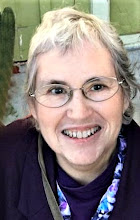
Stop by and visit Merrie's website at www.MerrieDestefano.com for a full discussion guide and more.
Showing posts with label Merrie Destefano. Show all posts
Thursday, December 4, 2014
Strategy # 6 Homespun Locale
Build Your Story: 8 Strategies for Writing Innovative Setting with Impact
“You present your
story in terms of things that can be verified by sensory perception. Sight,
hearing, smell, taste, touch—these are the common denominators of human
experience; these are the evidence that men believe.” Dwight V. Swain
Introduction Local Influence
No sensory observation is considered complete until the fictional
character’s emotional response is included. When eating new foods, or hearing
new sounds, the concrete details help the reader recognize the character as
more real as he reacts to the senses. Just as word choices need to be specific,
so do the sensory details need to be definitive, externally as images and
internally as personal reactions.
What are the telltale signs that we’ve moved from one neighborhood to
another? What makes the restaurant on one street so much better than the next?
We also want to make these sensory observations unique.
When we examine the local flavor of a setting we discover a treasure
trove of details in attitude and speech, special foods, ceremonial events,
public safety, law enforcement and city hall meetings.
Merrie Destefano set
her richly layered urban fantasy in New Orleans. Here’s the first question in
her discussion guide. As you think
of your ‘local’ setting consider how you would want readers to answer this
question for you. What influence would you want to filter down?
“Discussion Questions:
1. Afterlife:
The Resurrection Chronicles is set in New Orleans, a city rich in culture and
cuisine. It’s the historic birthplace of jazz, a center known for voodoo and
Mardi Gras, and it’s also a city that suffered greatly as a result of Hurricane
Katrina. How did the setting of New Orleans add to this story? How would you
describe the voice in which the author tells this tale? What does it add to the
overall effect of the book? Discuss.”
Share: What style
voice will you choose for your story?
Read deep, marcy
Stop by and visit Merrie's website at www.MerrieDestefano.com for a full discussion guide and more.
Thursday, July 19, 2012
Compose Through Metaphor
“Metaphors are the
gate-crashers of the spirituality static
quo.” Joy Sawyer
Author C.S. Lakin has been posting an interesting
mini-sequence discussion re theme at www.livewritethrive.com
under her category The Heart of the Story. She noticed that the movies she
chose for her discussion were huge hits because of their deep underlying
themes, which the viewers did not necessarily notice at first glance. Yet
because the themes “were so rich and deep” the audience took to them in spite of
poor acting. She has inspired me to take on a longer blog sequence on metaphors
and examine ways that ordinary images can create impact.
Metaphors are meant to help us see life through a fresh
perspective. When they tap into theme and character and setting and atmosphere
they have the ability to gate-crash through our pre-conceived clichéd views. Even
clichés were at one time a fresh perspective—so innovative in fact that they
eventually became overused.
And we don’t need to jettison familiar images. In fact
metaphors often work better through familiarity but need to be slightly angled.
Sometimes the image must loom large in order to crash through numbed thinking.
Other times it only needs to be a soft reflection that catches us up enough to
pause and take a deeper look.
Waiting For Midnight,
by Merrie Destefano, is a brief collection of short stories and flash fiction
that highlights the power of image and metaphor and theme in unexpected ways. By
altering the anticipated viewpoint character or the setting we step into the
story one side up, but come out the other end as if we were in house of
mirrors.
For example, in her flash fiction piece Breathtaking we immediately identify with the character’s desperate
struggle to simply take a breath—to fill out the form—to remain calm instead of
anxious in the emergency room—to remember. How many other images of trying to
simply breathe pass through our imagination as we struggle along with this
person wondering what is really causing his anguish. And then the mirror
metaphor shifts.
“No.
Not poison. My sweat on the floor, my blood, my skin. It was my own
designer disease, all brand new and deadly—
And, unfortunately, highly contagious.”
Journal Prompt:
Take a brief scene from your novel, either in dialogue, or
internal monologue, and twist the end into something opposite.
What impact would that have on your character’s situation
emotionally, spiritually, or mentally?
Even if you cannot use the shock difference at this moment,
is there a way you can introduce the possibility of another outcome?
Share: Did your
opposite effect turn into humor or shock?
Labels:
C.S.Lakin,
Creative Writing Prompt,
Flash Fiction,
Joy Sawyer,
Merrie Destefano,
Metaphors,
Short Stories,
Waiting For Midnight
Subscribe to:
Posts (Atom)