skip to main |
skip to sidebar
“You enter the extraordinary by way of the ordinary.” ~Frederick Buechner
Build Your Story: 8 Strategies for Writing Innovative Setting with Impact
“Think of the eerie
nature of these kinds of touch: the feel of a hand on the back of a neck; the
slippery quality of blood on skin; the light pressure of breath in a person’s
ear.” Jordan E. Rosenfeld
Suspense Exercise:
Touch
Writing Exercise
1.
Do you remember playing a game where you put
your hands into a bag and guessed what was inside? In whatever setting your
character is in, past, present or future, prepare a guessing bag for them and
put in common ingredients from their place for them to feel. Make a list of
their reactions.
2.
Use that memory to help you character through a
difficult situation, like a need to escape either emotionally, or literally
tied up with strong ropes.
Movie Exercise
1.
Choose one brightly lit scene from a favorite
movie in your genre and one darker setting.
2.
For each scene go through the sensory categories
in this strategy and make a list of everything you notice.
3.
Pick out the ones that seem to best highlight
each scene? Why
Here’s one example from the movie Hugo. In the scene when Hugo follows
George Melies home the night is dark, cold, and damp. The whole walk reflects
the shadows, the sadness, and the uncertainty ahead of him. Then the street
with funery figures highlight the magnitude of the grief that both these
characters are carrying and become an external image in cold stone.
Share: What most
unsettling sensation did your character receive in the bag?
Read deep, marcy
Build Your Story: 8 Strategies for Writing Innovative Setting with Impact
“In the physical world,
a house or boat or car in a state of decay will inevitably create suspense.
Rotting wood, a half-submerged car in a lake, or a trail of faded old clothing
will cause the reader to feel concerned.” Jordan E. Rosenfeld
Suspense Example: Decay
Second Example From A Memory Between Us by Sarah Sundin
This next historical novel includes war as well, but a century
later, and the focus in this summary excerpt is the emotional tension of a
growing romance. Look how weather, decay, color, and touch are used to build
authenticity here.
Innovative setting with sensory details has the potential to
provide a powerful impact and lingering effect whether its presence is subtle
or panoramic. In A Memory Between Us,
Sarah Sundin leans more towards this scene’s setting as a backdrop and subtle
presence, but she does it in a way as to highlight key story components,
sometimes all at once.
Excerpt: Chapter 11
Starting at page 96 as they stroll “down the street and through the imposing Norman Gate Tower. Jack
pointed out the slits in the thick stone walls.” They walk into a circular
garden where a man plays a violin to a group of children. Jack lays down his
jacket so Ruth doesn’t snag her stockings on the black, white, and gray stones
protruding from the mortar. And then too there’s the watch—time moving forward.

The setting is steeped in history—part of a ruined abbey.
And right now that is how Ruth views her own life, as in ruins. She struggles
between emotions that are black, white, and gray as she finds herself drawn to
Jack, and at the same time pushes him away. It’s interesting that Ruth
considers it stupid that the ancient building were torn down in the
Reformation. She has thick emotional walls surrounding her but there a few
slits opening and Jack is coming through them. Maybe she also has a
premonition, or fear, that her wall will be smashed too. But often our walls
have to come down so healing can take place. Which begins a few paragraphs on
as they prepare to dance and Ruth finds herself sobbing in his arms.
“Now the tears flowed in an unrelenting
stream. Folded in Jack’s arms, she could be weak, she could grieve, she could
be nurtured.” (And can’t you just hear the violin still playing.)
She feels safe, she weakens, he kisses her, she melts, and
then all the past ugliness rises up to poison the moment. In her sorrow and
hurt she then lashes out at Jack, and steps back into the ruins of her
heart.
Note the touch details here: the feel of the jacket, the
stones, the watch, her feet on the ground as they dance, Jack’s arms, the tears
on her cheeks.
Excerpt: Chapter 20
“‘Here we are. House of Parliament. Wow.
Look at the bomb damage.’ The rubble had been cleared long ago, but boards
still covered holes in the wall.”
They
walked further. “Ruth focused on the side
of an ancient building of pale gray stone with a regal façade rising to her
right. Westminster Abbey, of course. Every window was boarded up. ‘I heard they
removed the stained glass to storage during the Blitz.’” She stood imaging
the Abbey with its stained glass.
They walk and Ruth shares the conflict over money. Jack’s
anger shows at her aunt’s greediness, which is seen through the amount of money
she demands from Ruth. Ruth flashes back into the old poverty set up against
the opulence of Buckingham Palace and her fears for her siblings. She grasps
the bars, prison bars.
“Behind those walls people still got sick
and died and hurt each other. But behind those walls people never went to bed
hungry, never watched their loved ones work themselves to death, never turned
to immoral means in order to eat.”
Her shame keeps rising within her, the beauty of the day and
friendship seeping away and then she sees Eddie Reynolds and runs into the park
in a panic, hyperventilating.
“She
nodded, ashamed of her behavior and still fighting the terror that her secret
could have been revealed to destroy all she’d worked for, sacrificed for, and
sinned for.”
Note: details of decay and how they matched Ruth’s feelings.
Both these sensory settings became a mirror for Ruth’s
conflicts, gave characterization details for Ruth, and Jack, set the atmosphere
both internally and externally, provided the right mood and music, and
symbolism, and kept the narrative moving forward.
Share: How could
you use decay in your scene?
Read deep, marcy
Build Your Story: 8 Strategies for Writing Innovative Setting with Impact
“Dark colors lend
themselves to dark emotions.” Jordan E. Rosenfeld
Often we relegate suspense to mysteries, thrillers, and adventure
where in fact any genre can benefit from threads of suspense, especially when
emotional or spiritual struggles are intertwined in the narrative action.
Let’s take a look at how honest sensory keys, with different
details, can contribute to authenticity in three very different novels: two
historical (this Strategy #5) and one Science-fiction mystery next month.
(Strategy #6)
Suspense Example: Color
and Light
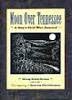
First Example from Moon over Tennessee by Craig-Christ
Evans
Here we return to the opening Strategy excerpt @ Strategy # 1 Habitat
Highways: An Ordinary Day. Take out your first notes and see if your
first impressions continue to hold with the additional section?
Remember this appears to start as an ordinary day:
“From
the barn I see my mother on the back porch washing beans,
my
little sister with her dolls there on the stoop, my father
leading
horses from the field.
Morning
sun crawls up, a yellow dog just waking,
stretching
one leg and another, then
its
wide-mouthed fiery yawn. I rub my
eyes and push
my
hand behind a plank, grope until my fingers
close
around the edges of a wooden box. Crouched
……..
He
stands inside the door, his hat pulled down, a bridle
Hanging
loosely in his hands. Behind him, sunlight
Makes
shadows dance across the dusty floor.”
What kind of scene are you seeing? What emotions do you
apply to this reading? Pick out specific words that you think contribute the
most emotional weight.
…….
“It’s
not because my daddy thinks
the
South should fight against the North,
but
we’ve been so long a piece of Tennessee
today
we’re leaving for the war.”
From Moon Over
Tennessee, A Boy’s Civil War Journal by Craig Crist-Evans.
How much does this sparse, yet detailed setting affect
character and theme? Based on these few verses, what do you expect to happen?
As an historical setting this passage establishes place,
historical framework, season, time of day, moods, and atmosphere. Its
authenticity allows us to fully participate.
Look at all the touch categories and how their familiarity
builds drama; washing beans, dolls, leading the horses, (both the touch of the
reins and their breath on hands) rub eyes, touch plank, grope, and loose
bridle.
What details show the weather and the use of color? Notice
there is no decay and yet the potential for decay is hinted at. How?
Share: Which detail
do you think had the strongest emotional impact? Why?
Read deep, marcy
Build Your Story: 8 Strategies for Writing Innovative Setting with Impact
Introduction Honest
Sensory Keys
The senses are as core
a scene element as you can get, and are very important in writing fiction
because they transform flat words on a page into three-dimensional, realistic
scenes. Jordan E. Rosenfeld
Sensory Influence
As we build our ground territory look for the key sensory influences
of each particular area. The senses permeate every situation. So it’s important
to note which sensory details will most effectively add to the scene’s purpose:
allusion, echo, theme, atmosphere, tone, description, setting,
characterization, and plot threads.
What does the air smell like when you open the door in the
morning, in the afternoon or in the evening?
Look for colors other than the flowers and trees. When it
rains is the mud black, brown, or red? What colors stay through a drought? When
you wade into the lake do your toes squish into a mushy bottom, or do you
gingerly tiptoe over sharp rocks? How quickly do you dry after a sudden summer
storm? Is it safe to light a campfire?
Mood, setting, and sensory details help establish their
impact. But they also need to be genuine. There is no room for exaggeration unless
the core of the narrative falls into that category. The same applies for no
longwinded purple prose. The key is precise choices within the real setting that
highlight without taking center stage.
Another consideration is what kind of scene is it? The
sensory influence can either be a mirror image of the key content of your scene
or can highlight the incongruity. Is your scene dramatic or reflective? How might that affect
the sunlight streaming into a room?
For this strategy sequence we’ll examine some story excerpts through
the lens of a suspense scene using some suggestions from Jordan E. Rosenfeld’s, Make A Scene, to build authenticity.
 For example: Weather: “Using dramatic weather, such as storms, blizzards, or harsh beating
sun, is a great way to create suspense if it imperils your character.”
Share: What
suspenseful weather scene do you most remember from a novel or a movie? I remember
the sinking of the Albatross in the movie White
Squall, based on a true story.
Read deep, marcy
Build Your Story: 8 Strategies for Writing Innovative Setting with Impact
Visible Threat: Case
Study
 Brinna
sighed. “I went into the water accidently, nothing heroic. Then I blacked out
and next thing I remember I was in an ambulance.”
….
Brinna
shook her head and explained. “When I saw the girl, adrenaline took over. I
tried to get close enough to the edge and grab her and fell in. It was stupid.
“Hear,
hear.” Maggie held up her soda cup up. “She and Rick were connected by a leash.
When Brinna lost her balance, so did Rick. They both went into the water, but he hit the rocks. Matt
and Jeff grabbed him; then all of a sudden there were firemen everywhere. Their
timing was impeccable.”
The above passage gives a version of the characters
impression of the events that left Long Beach Officer Brinna Caruso with a
broken wrist, and a fellow officer facing dangerous surgery due to a fractured
shoulder and broken back.
Earlier the readers saw that five police officers acted
capably and with courage, but not with any degree of irresponsibility. They all
knew the dangers of the river and took precaution. All Brinna planned to do was
kneel on the water’s edge in the hopes the drowning girl was swept close
enough. Rick also stood as close to the water’s edge as was safely possible. Then they added the
extra safety precaution of the leash.
It’s a great example of how the combination of a known
natural territory and experienced preparation can still upend a situation into
high conflict and high stress. Now
a life is on the line as well as a solid partnership, and relationships both personally
and professionally.
Exercise: Make a
short list of normal actions your character does in their daily job. Then next
to each one choose how an accident could be directly related to that normal
activity.
Share: Think of a
possible example for your character where a slight fall could have dire
consequences based on their territory.
Read deep, marcy
For more information on Janice Cantore's intriguing mysteries check out her site at: http://www.janicecantore.com/
Build Your Story: 8 Strategies for Writing Innovative Setting with Impact
Start your character’s journey, emotional and literal, with
his immediate environment. Have him see it close up. Then pick one or two
images to be representative of that territory.
 Writing Exercise
1.
Take a walk down a street in your childhood.
Write down what you see, hear, remember. Write quickly a free write, broadly
spaced. (about ten minutes)
2.
Now go back through your notes and add
specifics: sound, taste, and smell. For example, not just a swing on the front
porch or in a yard, but what kind of swing. Metal-wooden-plastic/size/sounds it
makes.
3.
Choose one aspect of your walk—a particular
setting or character or animal and highlight either by enhanced detail, or
exaggeration. Draw an analogy. For
example:
“And the story goes she never forgave him.
She looked out the window her whole life, the way so many women sit their
sadness on an elbow.” Sandra Cisneros.
Did some
additional thoughts, feelings insights come with each layer?
4. Take
the scene you used for your painting, and now have your character walk through
that ‘street’, even if the street is a pathway through a plain or a forest,
adding specific sounds, tastes, smells but using the emotional response you
experienced on your own memory walk.
Share: How
does that change from your original perspective, or does it?
Read deep, marcy
Build Your Story: 8 Strategies for Writing Innovative Setting with Impact
Territory as Journey
In addition to the close-up possibilities we also need to
step back and take an overview. Think in terms of a lens camera on zoom. We go
from the tight shot to the distance shot.
A chef stands back a little to look at his masterpiece
entrée. A quilter needs to move far back in order to see the whole when completed.
One way to take a different angle view of territory can be as a journey
regardless of distance.
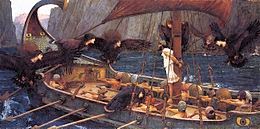
We can turn to the rich history found in myths and their
geography, which can be mined for today’s stories because their emotional
truths still apply despite the change in civilizations. In his book, Realms of Gold, Leland Ryken comments on
myth’s enduring qualities in one famous journey.
“During his
wanderings, Odysseus encounters approximately what anyone taking a journey away
from home would encounter today: violence, sexual temptation, drugs (the island
of the lotus eaters), the occult, physical danger, death, lost luggage,
homesickness, getting lost, culture shock (for example, the overnight in the
Cyclops cave and the spectacle of Odysseus’ seeing his fellow sailors
transformed into animals as he arrive at Circe’s house), hospitality, the
impulse to give up, inadequate transportation, a lost passport (Odysseus
arrives stark naked and without identity at Phaiacia), and personal conflict
with fellow travelers.”
 Sometimes we go on a journey and experience the unexpected.
It can happen through our travel plans where nothing is as it should be, or was
promised, or is even there anymore. It can happen in familiar territory like a
walk around the block where suddenly we see an incident that impacts our lives
and gives us an epiphany. We start off in one direction but when we come to the
end we find we are different. The journey has changed us within. So regardless
of genre, we almost have an internal radar to all journey stories, whether of
quest or immigration or exile or discovery or mystery, and regardless of
distance.
Share: What is your favorite childhood story that involved a journey?
Read deep, marcy
|